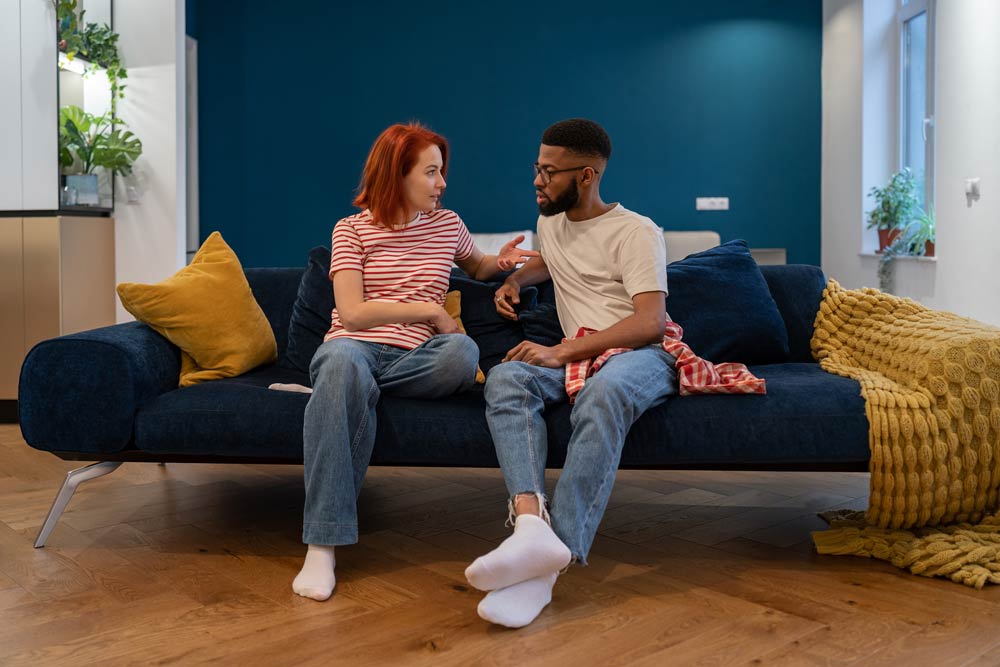
ADHD and Intimacy: Distraction, Initiative and Talking About It
How attention, impulsivity and sensory sensitivity show up in intimacy, why wanting and starting come apart, and how to talk about it outside the bedroom.

It is not that the desire is gone. It is that between wanting and doing there is a gap, and the gap fills with everything else: the thing you forgot to send, the texture of the sheets, the sudden certainty that the back door is unlocked. ADHD and intimacy is a topic couples search for privately and rarely raise out loud, which is a shame, because the patterns are common, recognisable, and more workable than they feel at 11 pm.
This is an explainer, not a clinical guide. It covers how the main features of ADHD tend to show up in a couple's physical relationship, why initiative is so often the sticking point, how to handle distraction in the moment, and how to talk about it when the moment has passed. It is written for either partner.
How attention, impulsivity and sensory issues show up in intimacy
The three threads of ADHD each pull in a different direction here. Attention is the obvious one: a mind that drifts mid-conversation also drifts mid-anything, and the drift is not a verdict on the partner. Impulsivity can go either way, from spontaneity that a relationship enjoys to a pattern of wanting intimacy now and losing interest once the newness fades. Sensory sensitivity is the one couples least expect. Many people with ADHD find some touch, textures, sounds, or lighting intensely distracting or actively unpleasant, and have never said so because it sounded fussy.
Add the everyday weight of ADHD, the executive-function tiredness at the end of a day of compensating, and the result is a partner who may be affectionate, interested in principle, and still rarely the one who starts. Our post on sensory overload and overstimulation in ADHD covers the sensory piece more fully.
Initiative and the mismatch between wanting and starting
The complaint my partner never initiates is one of the most common in ADHD relationships, and it is usually misread. The non-ADHD partner hears a lack of desire. What is often happening is a task-initiation problem applied to something that should not feel like a task. Starting anything, even something wanted, requires a transition, and transitions are precisely what ADHD makes hard. A partner may think about intimacy during the day, intend it, and then arrive at the evening with no transition left in them.
There is a second mechanism: the ADHD partner may simply not register the window. The cues a neurotypical partner thinks are obvious, a particular look, an early bedtime, a hand on the arm, may not be read as cues at all. Out of sight, out of mind applies to desire as much as to friends. Neither of these is indifference, and treating them as indifference tends to produce the one thing that does kill desire, which is pressure.
Distraction mid-moment and how to name it
The partner with ADHD drifts. The other partner notices, because people do, and feels rejected or boring. The ADHD partner notices that they have been noticed, feels ashamed, and drifts further. This loop is the single most useful thing to break, and it is broken by naming, not by trying harder.
- Agree in advance that drift gets named. A light phrase, chosen together, that means I wandered, I'm back, said without apology or drama.
- Agree that the response is neutral. The partner hearing it does not ask where they went. A squeeze of the hand, a laugh, carry on.
- Reduce the inputs. Phones out of the room. Lighting the ADHD partner finds comfortable. Sounds covered if the building is noisy. These are small adjustments that remove the most common hooks for drift.
- Let the ADHD partner lead on pace. Many find it easier to stay present when they are the one directing what happens next, rather than following.
Scheduling without killing the mood
Scheduling intimacy sounds like the end of romance and in ADHD households it is often the beginning of having any. The objection is that spontaneity is the point. The answer is that spontaneity was already not happening, because the partner who was supposed to spontaneously initiate was busy not noticing the window. A plan does not replace desire; it creates the transition that desire could not.
Keep it loose. A standing evening, not a time slot. A rule that it is a window, not an obligation: either partner can say not tonight without it meaning anything. Put something before it that both of you find unwinding, so the transition is into relaxation rather than into performance. And let the ADHD partner set the reminder, because a reminder they chose lands differently from one that was imposed. Our post on ADHD and dating has more on building rhythms that respect how ADHD attention works.
Talking about it outside the bedroom
The conversation about intimacy almost never goes well in the bedroom, in the dark, after something has gone wrong. Have it at a kitchen table on a Saturday afternoon, clothed, with coffee. Some structure helps.
- Each partner names one thing that is working. Start there, because it is true and because it lowers the temperature.
- Each partner names one thing they want more of or less of. Specific, kind, no history. I'd like you to start sometimes rather than you never start.
- The ADHD partner describes the gap. What happens between wanting and starting, in their own words. This is often the first time the other partner has heard that there is a gap at all.
- Pick one change from the sections above and try it for a month. One. The couples who try five things at once tend to end up trying none.
When to involve a therapist
Many couples can work through this on their own with the tools above. It is time to involve a professional when the pattern has produced resentment that the conversation cannot shift, when one partner has started avoiding touch altogether to sidestep the expectation, or when either of you suspects something beyond ADHD is involved. If anything has changed noticeably since a change in treatment, that is a conversation for the prescribing clinician rather than a guess.
Two kinds of help are relevant. Individual ADHD therapy works on the transitions, the initiation, the sensory load and the shame that gathers around all three. In Ontario, Finding Focus offers CBT and ADHD coaching through our therapy program. Couples and sex therapists work on the relationship itself; in Ontario, certification through the Board of Examiners in Sex Therapy and Counselling in Ontario is the usual credential to look for, and many provide virtual sessions.
This week, have the Saturday conversation. Choose the drift phrase. Pick one change. That is enough to start, and starting, as this whole post has been saying, is the hard part.
This article is for educational purposes only and is not medical advice, diagnosis, or treatment. Always consult a licensed healthcare professional about your individual situation. If you are in crisis or thinking about self-harm, call or text 9-8-8, Canada’s Suicide Crisis Helpline, at any time.
Finding Focus uses AI tools to help research and draft some articles. Every article is edited and fact-checked by the Finding Focus team before publication. See our editorial and medical review policy.