ADHD Cleaning Hacks Room by Room: Kitchen, Bathroom, Bedroom
ADHD cleaning hacks that hold up are visible, short and finishable. Room-by-room moves for kitchen, bathroom and bedroom, plus supplies that cut steps.
"Clean the kitchen" is not a task. It is a category with no end, and an ADHD brain will look at it, feel the size of it, and go do something else. That is why most ADHD cleaning hacks are really just ways of turning a category into a task with a visible finish line.
This is a room-by-room list of the ones that hold up over months rather than a weekend. Each room gets two or three hacks, a reason they work, and the supplies that make them easier. None of it is a deep clean. The goal is a home that stays livable without a Saturday being sacrificed to it.
The rules behind every hack: visible, short, finishable
Before the rooms, the pattern. Every hack below passes three tests, and if a tip you read elsewhere fails one of them, it will probably fail you too.
- Visible. The task targets something you can see from where you stand. Counters, not the inside of the fridge. Floors come after surfaces, because a clear counter changes how the room feels and a vacuumed floor under a messy counter does not.
- Short. Under fifteen minutes, usually under five. Anything longer gets a timer and a hard stop.
- Finishable. There is a countable end. Ten items. One sink. One chair. "Tidy the living room" is not finishable. "Fill one basket" is.
The other rule is that these are maintenance moves, not standards. The standard is "good enough to use the room without stress". Anyone telling you a kitchen should be spotless has not met a weeknight.
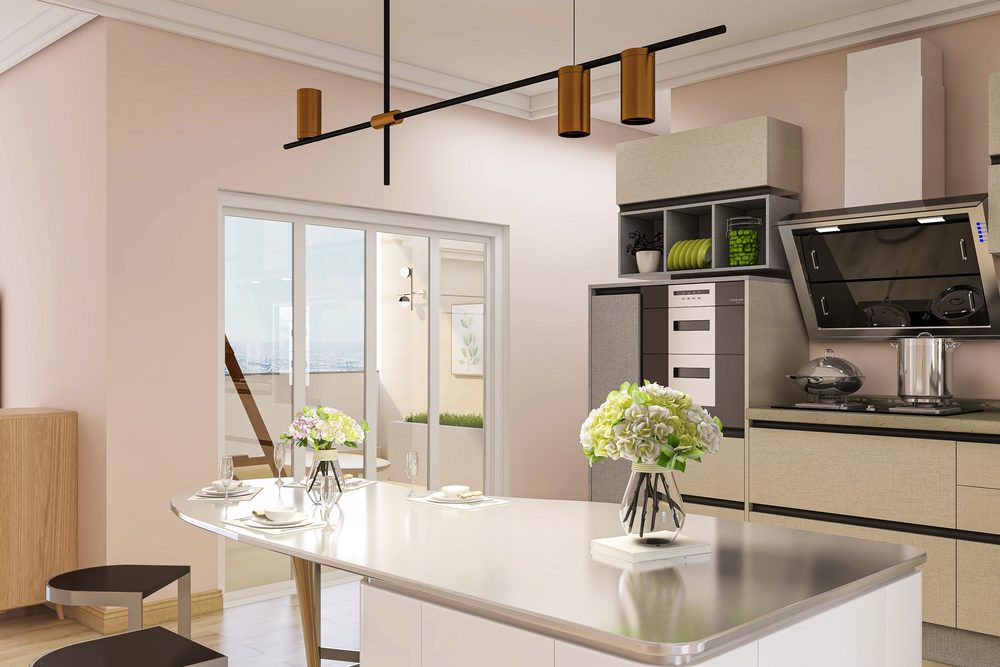
Kitchen: counters first, the sink rule, the ten-item sweep
Counters first. Counters are most of the visual noise in a kitchen. Clear them before touching anything else. Not clean, just clear: everything on the counter goes into one of three places, the dishwasher, its home, or a basket for things that belong in other rooms.
The sink rule. One rule, no exceptions: the sink is empty before bed. If you have a dishwasher, it runs every night whether or not it is full, because "is it full enough" is a decision and decisions are where it breaks. If you do not have one, the sink rule is the one chore worth doing at low energy, because tomorrow-you walks into a kitchen that works.
The ten-item sweep. When the kitchen is a mess and you have no plan, put away ten things and stop. Count out loud. Ten is enough to change the room and small enough to start when you are tired. If you feel like continuing, do another ten, but the agreement was ten.
Two supporting hacks: keep a multi-surface spray and a cloth on the counter, not under the sink, because opening a cupboard is a step. And hang a garbage bag on a cupboard handle during cooking so the trash never has to travel.
Bathroom: a basket under the sink and a five-minute wipe
Bathrooms are small and get dirty in predictable ways, which makes them the easiest room to keep. The trick is having everything in the room already.
- The basket. One open basket under the sink with wipes or a spray, a cloth, and a small brush. The toilet brush lives beside the toilet. Nothing is fetched from another room, ever.
- The five-minute wipe. While the shower warms up, or while brushing teeth with the other hand, wipe the counter, the taps and the toilet seat. That is the whole clean, four or five times a week. It never becomes a project because it never gets a chance to build.
- The squeegee. A cheap shower squeegee on a hook in the shower, used for thirty seconds before you step out, removes most of the reason to scrub glass or tile later.
- One hook per towel. Hooks, not a bar. Each person has one. Towels on the floor usually mean there was nowhere obvious to put them.
- An open bin. A lidless garbage bin, because a lid is one more step and a full lidded bin is invisible.
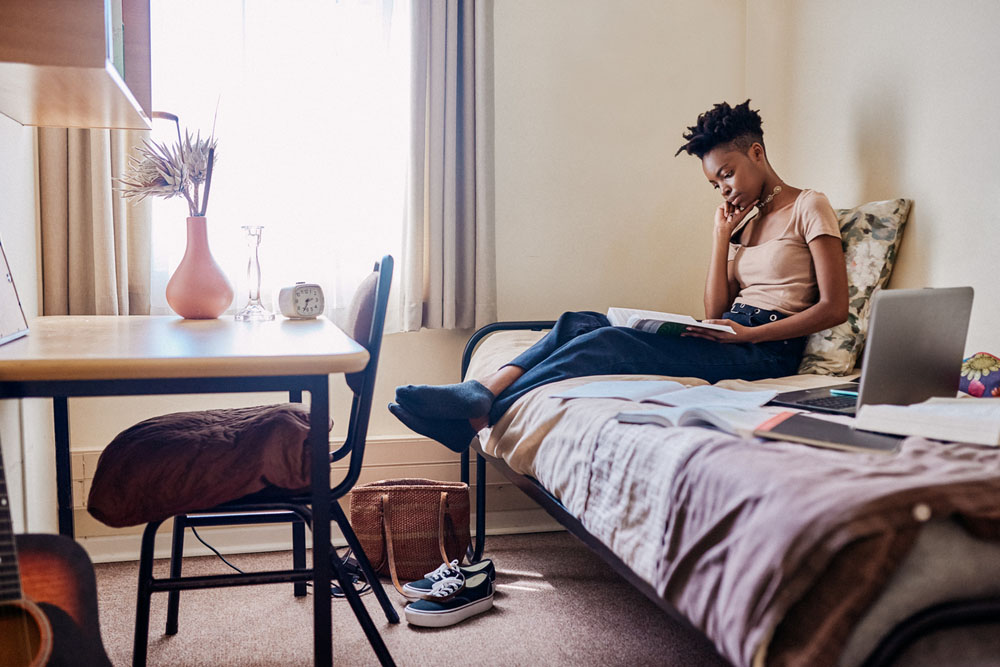
Bedroom: surfaces before floors, the one-chair limit
Make the bed first. The bed is most of the surface area in the room. A made bed with a messy floor reads as mostly tidy. The reverse does not. Thirty seconds, duvet pulled up, pillows roughly where they go.
Surfaces before floors. Nightstand and dresser top next. Everything on them goes to its home, the sort-later box, or the laundry. Only then the floor, and only with a basket in hand so nothing gets carried one item at a time.
The one-chair limit. Nearly every ADHD bedroom has a chair of clothes that are not dirty but not put away. Instead of fighting it, make it official. One chair, and when the chair is full that is the cue to deal with it: worn-once things on hooks, the rest into the hamper. The chair is allowed. The second chair, the floor and the exercise bike are not.
An open hamper in plain sight. Lidded hampers in closets never look full. An open basket in the room where clothes come off gets used. Our guide to staying organised with ADHD has more on making the right action the easy one.
Living areas: the laundry-basket pickup method
Living rooms collect things from every other room: mugs, chargers, a kid's sock, three books, the mail. Walking each one back to where it lives is a dozen trips and a dozen chances to get distracted on the way.
Instead, take an empty laundry basket and walk the room once. Everything that does not belong in this room goes in the basket. Do not deliver anything yet. When the basket is full or the room is clear, walk the house once with the basket, dropping things at their homes. Two laps instead of twelve, and the basket is the finish line.
Then surfaces: coffee table clear, cushions roughly back, blanket folded over the arm. Five minutes. If you do this as a reset before sitting down for the evening rather than after, the room is the one you relax in rather than the one you feel guilty in.
For bigger jobs in shared spaces, borrowed focus helps. Body doubling, which just means having someone else present or on a call while you work, is the single most reliable way many people with ADHD get a living room done.
Supplies that remove steps (and ones that add them), and what to try this week
The right supply is one that deletes a step between noticing a mess and dealing with it. The wrong supply adds a step and then sits in a cupboard.
- Removes steps: a cordless stick vacuum on a wall hook (plugging in is a step; a cord is three), wipes in every room, one multi-surface spray for everything, a spray mop, open bins and hooks, a second set of cloths so laundry day does not stall cleaning, and a robot vacuum if the floor is usually clear enough for it.
- Adds steps: specialty cleaners for each surface, anything that needs diluting, a cleaning caddy that lives in a different room from the mess, a cleaning app with a thirty-task schedule, and matching containers that need labels before you can use them.
Dollarama covers bins, spray bottles and hooks for under twenty dollars. A decent cordless vacuum runs roughly $150 to $300 CAD at Canadian Tire or Walmart, and for many ADHD households it is the one purchase that changes how often floors get done.
- Pick one room and one hack from it. Not the whole list.
- Put the supplies for that hack in that room today.
- Do the hack five days this week, with a timer, and stop when it ends.
- Next week, add a second room. The kitchen sink rule is the best second pick if you did not start there.
If you have tried systems like these before and they dissolve within a month, the problem is often not the system but the planning and follow-through underneath it. Here is a clear answer on how ADHD coaching or CBT can help with home organisation that never sticks. Finding Focus offers CBT and ADHD coaching in Ontario, and online ADHD assessment for adults and teens in several Canadian provinces, with no referral needed.
This article is for educational purposes only and is not medical advice, diagnosis, or treatment. Always consult a licensed healthcare professional about your individual situation. If you are in crisis or thinking about self-harm, call or text 9-8-8, Canada’s Suicide Crisis Helpline, at any time.
Finding Focus uses AI tools to help research and draft some articles. Every article is edited and fact-checked by the Finding Focus team before publication. See our editorial and medical review policy.