Best Hobbies for Women With ADHD: 20 Ideas Sorted by Energy Level
Twenty hobbies grouped by how much energy they ask for, with cheap ways to try each one and a plan for fitting it around everyone else's schedule.

There is a box in your closet with a half-finished cross-stitch, a yoga mat with the tags on, and the watercolour set from the phase in 2023. You know the box. Most women with ADHD have one.
The best hobbies for ADHD women are not the ones that promise calm or discipline. They are the ones that match your energy on a given day, keep your hands busy enough to quiet your head, and forgive you for disappearing for a month. This list is sorted that way, with low-cost ways to try each one in Canada before you buy the gear.
Before the list, a word about the box, because it is not what you think it is.
Why hobbies drop off for women with ADHD (and why that is not failure)
The ADHD brain runs on interest, not importance. When a hobby is new it floods the system with novelty, and the result is the two-week stretch where you knit every evening and research looms. Then the novelty fades, the hobby becomes a task, and a task with no deadline loses to everything else. That is not a character flaw. It is how interest-driven attention works, and the intense early phase, which we describe in what is hyperfocus, is the same engine that makes the start so good.
Women carry an extra layer. Many were diagnosed late or not at all, having spent years masking, and the symptoms of ADHD in women often include being the household's default planner, which leaves no slot in the week that belongs to nobody else. Hobbies die of having no protected time more often than they die of boredom. So the box is not a graveyard. It is a rotation that nobody told you was allowed.
High-energy hobbies: movement, dance, climbing
For restless days, or for the kind of ADHD where the body needs to be used before the mind will settle.
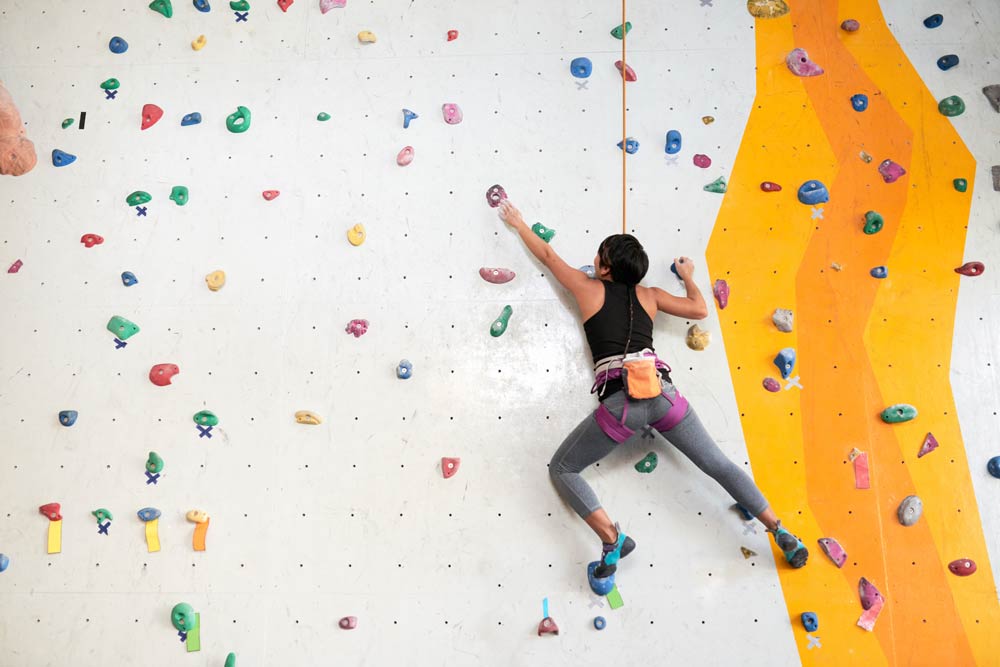
- Bouldering. Short, intense problems with an obvious finish. Every climb is a new puzzle, which keeps novelty high. Most Canadian cities have at least one gym with a cheap first-visit pass and no belay course needed.
- Drop-in dance. Hip hop, salsa, Zumba, whatever the community centre runs. Music gives the brain a beat to hold, and drop-in means no commitment to a term.
- Recreational league sports. Municipal rec volleyball, soccer or ultimate. Teammates who expect you are the best external motivator ADHD has ever found.
- Trail walking or running. Changing terrain holds attention in a way a treadmill never will. Provincial parks and conservation areas are cheap on a day pass.
- Boxing or martial arts fitness. Combinations to remember, a coach shouting cues, and a strong sensory reset. Many clubs offer a free first class.
- Skating and cross-country skiing. Winter versions of the same idea. Outdoor rinks are free in most municipalities and many lend skates.
Hands-busy hobbies: pottery, knitting, gardening
For evenings when you are tired but wired. Hands occupied, head quieter. Many people with ADHD find these are the hobbies that survive longest, because they can be done while listening to something and picked up in ten-minute pieces.
- Pottery. Wheel or hand-building. Clay is messy, tactile and unforgiving of multitasking, which is the point. Studios across Canada run single-session tasters before you commit to an eight-week course.
- Knitting or crochet. Portable, repetitive, and a legitimate reason to keep your hands busy in meetings and waiting rooms. Start with chunky yarn and a dishcloth, not a sweater.
- Container gardening. A balcony of herbs and tomatoes gives daily small tasks with visible feedback. Community garden plots are cheap but often waitlisted, so apply in winter.
- Cooking projects. Sourdough, fermenting, dumplings from scratch. A project with a defined end and a reward you can eat.
- Furniture flipping. Kijiji and Buy Nothing groups supply the furniture for free. Sanding and painting are absorbing, physical and finish in a weekend.
- Sewing and mending. Visible mending in particular is forgiving, fast and oddly satisfying. Libraries and community centres sometimes lend machines.
- Puzzles and building sets. Jigsaws, model kits, adult brick sets. Low stakes, clear progress, and nothing to feel guilty about abandoning for a week.
The creative options in particular have benefits beyond keeping busy, which we explore in the benefits of creative outlets like music and art.
Novelty-friendly hobbies you can rotate without guilt
These are built around variety, so the novelty never fully wears off, or they are easy to pick up and drop in cycles.
- Language learning with conversation meetups. An app alone dies in three weeks. An app plus a weekly conversation group at the library has a person expecting you.
- Photography walks. Your phone counts. A theme each walk, such as doors or the colour red, turns a boring route into a hunt.
- Volunteering in shifts. Food banks, animal shelters, trail maintenance. Scheduled, social and finite, which suits an ADHD brain better than an open-ended project.
- Board game cafes and tabletop role-playing. Rules to learn, a group that meets, and a new game every time. Most cities now have a cafe where you pay a few dollars to play from the shelf.
- Geocaching. A free app, a treasure hunt in your own neighbourhood, and an excuse to explore. Works with kids in tow.
- Choir or community singing. No audition groups exist in most cities. Breath, rhythm and a room full of people make it a surprisingly strong regulator.
- Instrument on loan. Several Canadian public library systems lend ukuleles, guitars and keyboards. Borrow one for three weeks and see if it survives the novelty window.
Rotating between these is the plan, not a failure of the plan. For more on choosing by interest rather than by what you think you should enjoy, see finding hobbies that align with ADHD interests.
Low-cost ways to try before you commit
The box in the closet is expensive. Before buying anything, try one of these.
- Municipal recreation drop-ins. Most cities list single-session prices well under what a studio charges, and many offer subsidised passes for lower-income residents.
- The public library. Beyond books: free museum and gallery passes, seed libraries at some branches, instrument lending, maker spaces with sewing machines and 3D printers, and free program registration.
- Tool libraries and libraries of things. Toronto, Vancouver, Calgary, Ottawa and others have them. Borrow the sander, the sewing machine or the tent for a week for a small membership fee.
- Buy Nothing and Marketplace. Half the gear in other people's boxes is free. Yours can go back the same way when the phase ends.
- One-session tasters. Pottery, climbing, dance and martial arts studios almost all run them. Pay for one class, never a term, until a hobby has survived a month.
- The 30-day rule. No purchases over 50 dollars until you have done the hobby four times with borrowed or basic gear.
Making space for a hobby when you are the household's default planner
None of the above matters if there is no hour in the week that belongs to you. For many women with ADHD, that is the real obstacle, and it needs a direct conversation rather than hoping a slot appears.
- Pick one fixed slot. Tuesday 7 to 8:30 p.m., or Saturday 9 to 11 a.m. Same time every week, so nobody has to re-negotiate it and neither do you.
- Put it in the shared calendar with a name, not just a block. Pottery, not busy. It is harder to schedule over something with a name.
- Hand off the slot entirely. Whoever else is in the house owns dinner, bedtime or the kids for that window, without being briefed.
- Pair the hobby with a person or a place. A class, a group, a studio booking. Leaving the house is the most reliable way to stop the slot being eaten by laundry.
- Let it rotate. When the pottery phase ends, the slot stays and the hobby changes. The time is the thing you are protecting, not the activity.
This week, do two things. Choose one hobby from the list that fits the energy you actually have most evenings, and book the slot in the calendar with its name on it. Then tell whoever shares your home that the hour is spoken for. The box in the closet was never the problem. The missing hour was.
References
- 1.CHADD. Women and girls with ADHD. View source ↗
This article is for educational purposes only and is not medical advice, diagnosis, or treatment. Always consult a licensed healthcare professional about your individual situation. If you are in crisis or thinking about self-harm, call or text 9-8-8, Canada’s Suicide Crisis Helpline, at any time.
Finding Focus uses AI tools to help research and draft some articles. Every article is edited and fact-checked by the Finding Focus team before publication. See our editorial and medical review policy.