Couples Counselling with an ADHD Partner: What to Look For in Ontario
Who provides couples counselling in Ontario, what benefits actually cover, the questions that reveal ADHD experience, and when individual work comes first.

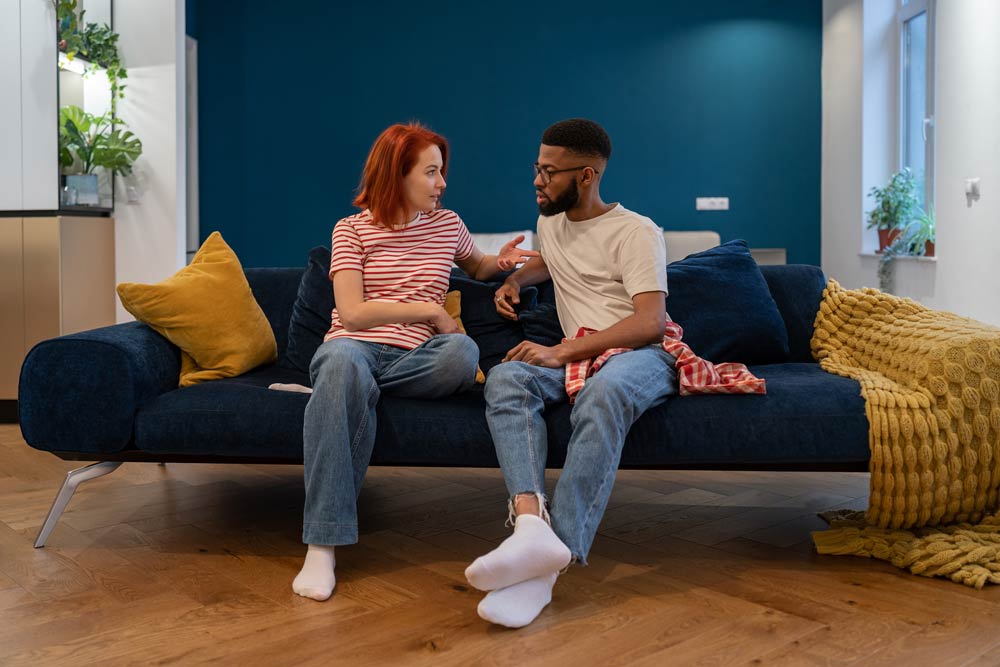
The same argument, fourth time this month. One of you is exhausted from being the household's memory. The other is exhausted from being told, again, what they forgot. Somebody finally says the word counselling, and then the practical questions start. Who do you even book? Does a regular couples counsellor understand ADHD, or will they spend six sessions on communication styles while the actual problem sits in the corner?
Couples counselling with an ADHD partner in Ontario is a slightly different search from plain couples counselling. The provider needs to understand that some of what looks like a relationship problem is an executive-function problem wearing a relationship costume. This guide covers who provides it, what to ask, what benefits cover, and when the counselling should wait.
Couples counselling versus individual ADHD therapy: who does what
These are two different services, and many couples eventually use both. It helps to know which problem each one is for.
- Couples counselling works on the relationship: how you argue, how you repair, who carries what, what each of you needs and is not saying. Both partners are the client. The counsellor is not there to treat ADHD.
- Individual ADHD therapy, usually CBT or ADHD coaching, works on the skills of the person with ADHD: planning, follow-through, emotional regulation, routines. One person is the client, although a partner can sometimes sit in. Our answer on whether a partner can join an ADHD therapy session in Ontario explains how that works.
- Psychoeducation for the non-ADHD partner is sometimes folded into either, and is often the single most useful hour: understanding that forgetting is not a measure of caring changes how every subsequent argument goes.
A rough rule: if the fights are about the same three logistical failures, start with individual ADHD work and a shared system. If the fights are about contempt, trust, or feeling unseen, start with couples counselling. If it is both, which is common, a couples counsellor with ADHD experience can help you sequence it.
Questions to ask a counsellor about ADHD experience
Most counsellors in Ontario offer a free 15-minute consultation call. Use it. The goal is not to quiz them on diagnostic criteria but to find out whether ADHD is a normal part of their practice or a thing they will look up afterwards.
- How often do you work with couples where one partner has ADHD? You want a specific answer, not I work with all kinds of couples.
- How do you handle it when one partner's forgetting is a recurring issue? Listen for whether they treat it as a skills and systems problem or purely as a communication problem.
- Do you ever recommend individual work alongside couples sessions? A good answer acknowledges that some things need to be worked on separately.
- What is your approach? Emotionally focused therapy and Gottman-method work are common for couples; neither is ADHD-specific, so ask how they adapt them.
- What happens if one of us wants to stop? A clear, non-defensive answer here tells you a lot.
Who can provide it in Ontario and what benefits cover
Several regulated professions offer couples counselling in Ontario, and the regulation matters because benefits plans reimburse by professional title. Registered Social Workers (RSW) are regulated by the Ontario College of Social Workers and Social Service Workers. Registered Psychotherapists (RP) are regulated by the College of Registered Psychotherapists of Ontario. Psychologists and psychological associates are regulated by the College of Psychologists and Behaviour Analysts of Ontario. All three can provide couples counselling; the training routes and typical fees differ.
Typical private fees in 2026 run from roughly 130 to 220 CAD per session for an RSW or RP and higher for a psychologist, with couples sessions often priced above individual ones because they run longer. OHIP does not pay for private counselling by an RSW or RP. Some Family Health Teams and Community Health Centres offer counselling at no charge, but couples work is less commonly available that way and waits can be long.
Benefits are where couples get caught out. Many Ontario workplace plans cover psychologists, and an increasing number cover RSWs and RPs, but the claim is usually filed under one plan member as the client. Some plans exclude couples or family counselling specifically, and some do not. Our answer on whether RSW therapy sessions are covered by benefits in Ontario covers the title question, and our guide to checking your benefits plan for ADHD coverage walks through reading the booklet. Call the insurer and ask two things: which professional designations are covered, and whether couples counselling is covered or excluded. Write down the answer and the date.
Virtual versus in-person for couples
Individual therapy moved online smoothly. Couples work is more mixed, and worth thinking about rather than defaulting to whichever is easier to book.
- Virtual works well when you live outside Toronto or Ottawa and the ADHD-experienced counsellors are all in the city, when childcare makes leaving the house hard, or when one partner's ADHD makes a 40-minute drive to a 5 pm appointment a genuine barrier.
- In-person works better when arguments at home escalate fast and you need a neutral room, when one of you tends to multitask on video calls, or when the counsellor needs to read body language closely.
- Either way, sit in the same room, not on two devices in two rooms. A shared screen keeps you on the same side of the table.
What a first session covers
The first session is mostly intake. Expect each of you to be asked why you are here, what you hope changes, and how you each see the problem. A counsellor who knows ADHD will usually ask directly: when was the diagnosis, is there treatment in place, who manages the household logistics now. They may ask for a few minutes with each of you separately. You will probably not solve anything in session one, and that is normal. You should leave with a sense of whether this person understood both of you, and a rough plan for the next few sessions. If one of you felt ganged up on, say so before booking the second.
When individual work needs to come first
Couples counselling assumes both people can show up and do the work between sessions. Sometimes the ADHD partner cannot yet, not for lack of wanting but because the executive-function side is untreated and every homework assignment becomes one more forgotten thing to fight about. In that case, individual ADHD therapy first, couples work second, tends to go better. Our post on CBT for ADHD explains what that individual work involves.
Finding Focus offers CBT and ADHD coaching in Ontario; the details are at our therapy page. That is individual work, not couples counselling, but it is often the piece that makes couples counselling possible.
This week: make the benefits call, write down the two answers, and book two consultation calls with counsellors who name ADHD on their profile. Ask the five questions above. Then decide together, in a calm moment, which door to go through first.
This article is for educational purposes only and is not medical advice, diagnosis, or treatment. Always consult a licensed healthcare professional about your individual situation. If you are in crisis or thinking about self-harm, call or text 9-8-8, Canada’s Suicide Crisis Helpline, at any time.
Finding Focus uses AI tools to help research and draft some articles. Every article is edited and fact-checked by the Finding Focus team before publication. See our editorial and medical review policy.