Forgetting to Eat With ADHD: A Meal System for No-Hunger Days
Why hunger cues go quiet with ADHD, how to eat by the clock instead, three default lunches you never have to decide, and reminders that stick.
It is 4:15 p.m. You have been furious at a spreadsheet for an hour, you have a headache, and your hands are a little shaky. Then it lands: you have not eaten since the coffee at 8. You did not decide to skip lunch. Lunch simply never came up.
Forgetting to eat with ADHD is common enough that clinicians ask about it, and it is not about not caring about food. It is about hunger signals that do not reach the part of the brain that makes decisions, and about a day that offers no natural stopping point. This post is a system for days when hunger will not remind you: eating by the clock, a default meal list that removes the deciding, and reminders attached to things you already do.
Why hunger cues go quiet with ADHD: interoception and hyperfocus
Interoception is the sense of what is going on inside your body: hunger, thirst, a full bladder, tiredness. Many adults with ADHD describe this sense as muffled. The signal is there, but it is quiet, and it has to compete with everything else for attention. In an ADHD brain, everything else usually wins.
Hyperfocus makes it worse. When you are locked into a task, the body's signals are turned down even further, and the first ones to break through are not stomach growls. They are irritability, a headache, brain fog, shakiness, or a sudden crash in mood. By then you are several hours past when a meal would have helped, and you often read the signals as a work problem or a mood problem rather than a food problem.
ADHD medication can add a layer. Some people find appetite is quieter while stimulant medication is active, so the one cue that might have broken through is quieter still. That is expected enough that it is on the list of things prescribers ask about, which we come back to at the end.
Eating by the clock, not by the stomach
If the stomach is not going to tell you, the clock has to. The rule is simple and a little unromantic: meals happen at set times whether or not you are hungry, in the same way that medication or a meeting happens at set times. You are allowed to eat a small amount if you have no appetite. You are not allowed to skip.
- Three anchors and a bridge: something at 8, lunch at 12:30, a snack at 3:30, dinner by 7. Shift the times to your own day, but keep the gaps under five hours.
- Hungry is not the trigger. Time is the trigger. If 12:30 arrives and you feel nothing, you eat anyway, because the crash at 4 is already on its way.
- Small counts. Half a sandwich and a yogurt at 12:30 is a success. The point is to keep the body out of deficit, not to have a proper meal.
- If you are deep in a task at the anchor time, you do not need to stop the task. You need to put food in front of you and eat while you keep going. Eating at the desk is fine. Not eating is the problem.
The default meal list: three lunches you never have to decide
Forgetting to eat is only half of it. The other half is that lunch, when you do remember it, requires a decision, and the decision is where it dies. The fix is a default: three lunches, chosen once, bought every week, eaten in rotation without thinking. The rules for a default lunch are strict on purpose.
- Under five minutes from fridge to mouth. No stove.
- Keeps for at least five days, so one grocery run covers the week.
- Has protein and fibre in it, so it holds until the afternoon snack.
- Can be eaten cold, at a desk, with one hand, if that is the kind of day it is.
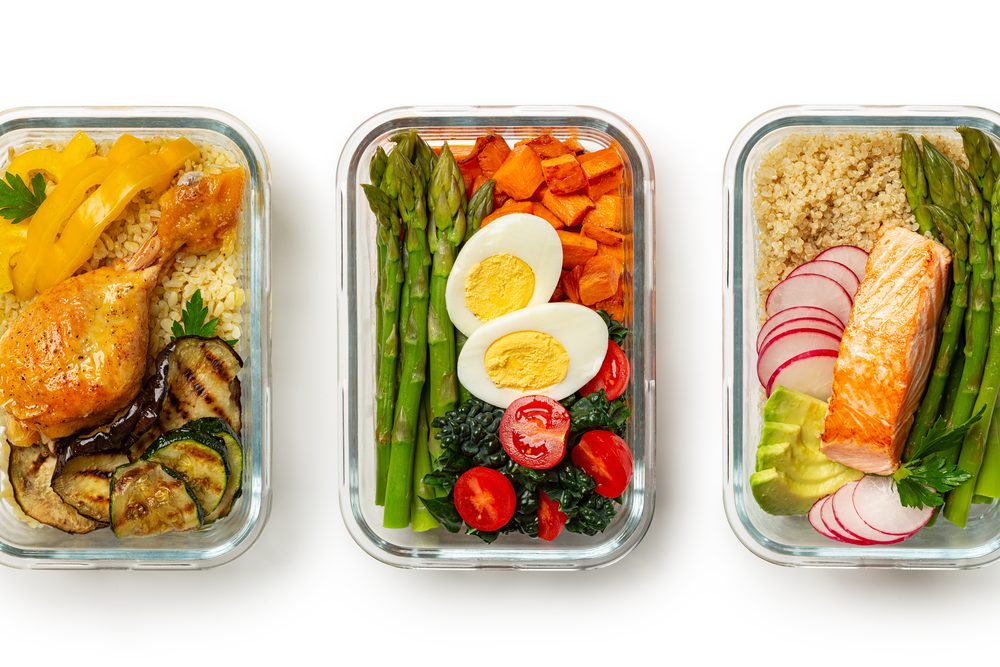
Three that pass the test. The tin lunch: a tin of tuna or salmon, a sleeve of whole grain crackers, baby carrots and a tub of hummus. The rotisserie lunch: a grocery-store rotisserie chicken pulled apart on Sunday, a bagged salad, a pita, a squeeze of dressing. The no-cook bowl: cottage cheese, a sliced apple or canned fruit, a handful of nuts. Write the three on a card, tape it inside the cupboard, and buy all three every week until it is automatic. Keep an emergency drawer at work or in the car as well: nut butter packets, oatmeal cups, jerky, a few granola bars. The emergency drawer is for the day the system fails, and that day will come.
Reminders that work: pairing food with an existing anchor
A phone alarm named Eat will be dismissed inside a week. Reminders survive with ADHD when they are attached to something that already happens, so the thing you already do becomes the cue. Our post on habit stacking explains the general method; here it is applied to food.
- After a fixed meeting. If there is a daily stand-up or a noon check-in, lunch is the thing that happens the moment it ends. Put the food on the desk before the meeting starts.
- With the dose. If you take medication at a set time, pair breakfast with it: food first, then the pill. The pill bottle becomes the breakfast reminder.
- With someone else's lunch. Eat when a colleague eats. For parents, eat when you make the kids' lunch, standing at the counter. A lunch body-double works for the same reason a work body-double does.
- With the kettle. The 3:30 cup of tea is already a habit for many people. The snack lives in the same cupboard as the tea.
- In your line of sight. A fruit bowl on the desk, not in the kitchen. A water bottle beside the keyboard. Visible food is remembered food.
- With the alarm you do not dismiss. If you must use a phone, make it a location reminder when you arrive at work, and label it with the actual food, not the word Eat. Tin lunch, 12:30.
For teenagers, the bell schedule is the anchor: the lunch period is the cue, and a parent's text at 12:05 saying what is in the bag is a reminder that does not feel like nagging.
When forgotten meals are a medication or health conversation
Most forgotten meals are a systems problem, and the system above is the fix. Some patterns deserve a clinician instead. Weight dropping without trying. Dizziness or lightheadedness most late mornings. Days where the first real food is dinner, most days of the week. A nightly binge that follows a day of nothing. Any of these, on their own or together, is worth reporting at your next appointment, and sooner if it is a teenager, because growth and appetite are watched closely in that age group. The answer on how ADHD medication affects appetite, growth and sleep in teenagers explains what prescribers monitor and why.
If you are on ADHD medication and appetite has become the main side effect you notice, say so plainly. Dose timing, meal timing and other adjustments are ordinary parts of ADHD care, and the answer on how ADHD treatment affects inconsistent eating routines walks through what that conversation usually covers. This week, the whole assignment is one card with three lunches on it, taped inside a cupboard, and one anchor for the 12:30 meal.
References
- 1.CADDRA (2020). Canadian ADHD Practice Guidelines, 4.1 edition. View source ↗
- 2.Health Canada. Canada's Food Guide. View source ↗
This article is for educational purposes only and is not medical advice, diagnosis, or treatment. Always consult a licensed healthcare professional about your individual situation. If you are in crisis or thinking about self-harm, call or text 9-8-8, Canada’s Suicide Crisis Helpline, at any time.
Finding Focus uses AI tools to help research and draft some articles. Every article is edited and fact-checked by the Finding Focus team before publication. See our editorial and medical review policy.