Smartwatches for ADHD: Haptic Reminders and Timers on Your Wrist
What a wrist-worn reminder does for ADHD that a phone cannot, the features that matter, full smartwatch versus simple vibrating watch, and CAD price tiers.

The phone reminder fired at 2:45. The phone was in your bag, face down, on silent, because the meeting before had a no-phones rule. At 4:10 you remembered the 3 o'clock call. Everyone with ADHD has a version of this story, and most have several.
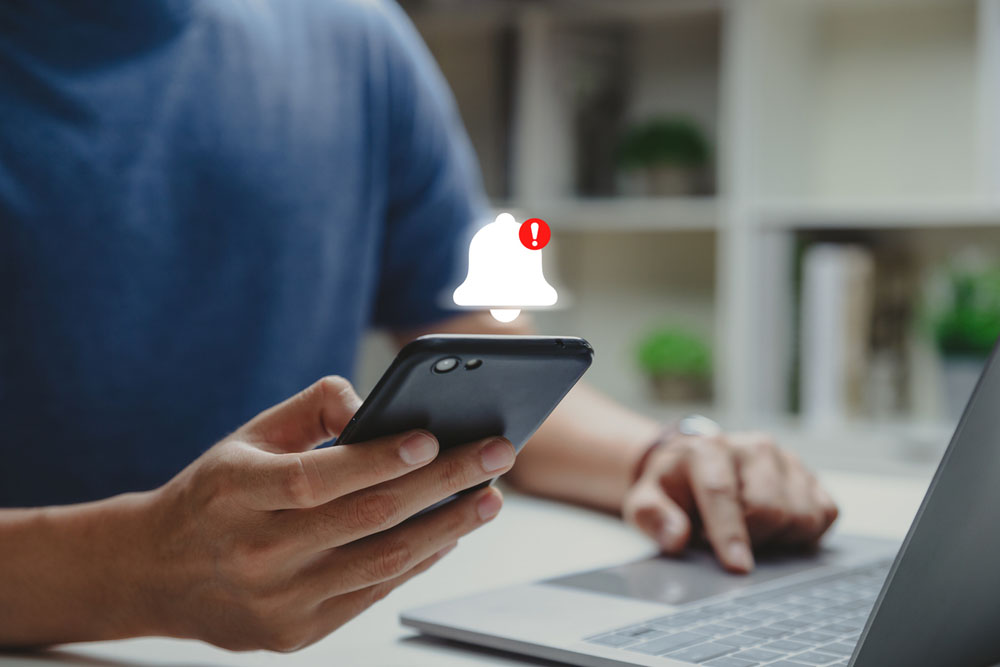
A smartwatch for ADHD solves the delivery problem. A reminder on the wrist arrives against the skin, cannot be left in a bag, and does not require opening a device that also contains every distraction you own. That single change, moving reminders from a phone you avoid to a wrist you cannot, is why wearables have become one of the more useful tools for adults and teens with ADHD.
This post covers what the watch needs to do, whether a full smartwatch or a simple vibrating watch is the better buy, what works for teens inside school rules, and what each tier costs in Canada.
Why a tap on the wrist beats a phone buzz in a drawer
Three properties make the wrist a better place for an ADHD reminder than a pocket or a desk.
- It is always on you. Phones get put down, flipped over, left in another room, buried under a coat. A watch is on the body until bedtime.
- It is private. A haptic tap is silent. Nobody in the meeting, the classroom or the cinema knows a reminder fired. That makes it usable in exactly the places where phones are banned or rude, which are the places where reminders are most needed.
- It is a glance, not a dive. Looking at a watch takes two seconds and offers nothing else to look at. Looking at a phone to check a reminder has a well-known tendency to become twenty minutes of something else.
The wrist also changes what kind of reminder you set. Our post on setting alarms for task reminders covers layering; on a watch, a reminder every 30 minutes through an afternoon becomes tolerable in a way it never is on a phone.
Feature checklist: haptics, timers, calendar glance, no social feed
Ignore the step counts and the sleep scores. For ADHD, the watch has six jobs. Score any watch against this list before buying.
- Strong, adjustable haptics. The tap has to be felt through a sleeve and noticed mid-conversation. Try it in the store if you can. Some bands are too gentle to register once you are absorbed in something.
- Timers that start from the wrist in two taps. A countdown you can set without the phone, with a repeat option. This is the tool for the 25-minute work block, the 10-minute leave-the-house warning and the stove.
- Multiple alarms with labels. Not one alarm, but eight: medication, leave for work, lunch, the 2 p.m. meeting, the kid's pickup. Each should show its label when it fires, so you know what it is without guessing.
- A calendar glance on the watch face. The next event and its time, visible without tapping. For many people with ADHD this is the feature that ends up mattering most.
- Task-app notifications with an action. When the to-do app fires, the watch should offer complete or snooze on the wrist. If it only shows the text, you will have to find the phone anyway.
- No feed. Social apps, news and messaging previews should be off or absent. A watch that shows the group chat is a smaller phone, with all the same problems.
For how the watch fits with the rest of a reminder stack, our answer on which digital ADHD tools help manage time, reminders and focus is the broader map.
Full smartwatches vs simple vibrating watches
There are two very different products here, and the cheaper one is often the better fit.
Full smartwatches from Apple, Samsung, Google and Garmin pair with the phone and mirror its calendar, task app and reminders. They do everything on the checklist. The costs are price, a battery that needs charging every one to two days for the big-brand models, and a temptation to install apps until the watch becomes a distraction of its own. The setup work is real: notifications must be pruned on day one, and most people with ADHD find they need to turn off nearly everything except calendar, reminders, timers and calls.
Simple vibrating reminder watches do one thing. They hold a set of daily alarms, often eight to twelve, each with a short text label, and vibrate silently at those times. Some add a countdown timer and an interval reminder that buzzes every set number of minutes. No apps, no phone pairing, no charging; a coin-cell battery runs for a year or more. They were originally designed for medication timing and for children, and they remain the least distracting option on the market. The limitation is that they cannot show a calendar or receive a task-app notification; everything is set in advance by hand.
A reasonable rule: if your life runs on a phone calendar that changes daily, a full smartwatch mirrors it and earns its price. If your week is mostly the same set of fixed times, a vibrating watch does the job for a fraction of the cost and with none of the temptations.
Watches for teens and school rules
Most Canadian school boards now restrict phones during class time, and several treat connected smartwatches the same way, since they can receive messages. A teen with ADHD who wants wrist reminders at school has three options.
- A simple vibrating watch. It cannot receive messages, so it falls outside most phone policies. The alarms for medication, class changes and pickup are set at home. For many families this is the obvious choice for Grades 7 to 10.
- A smartwatch with school mode. Some full smartwatches offer a schedule-based mode that blocks everything but the time and alarms during set hours. Worth checking the board's policy before relying on it.
- Writing it into the IEP or accommodation plan. If a watch alarm is the tool that gets a teen to the resource room on time or reminds them to take medication at lunch, it can be named as an accommodation. A listed device is harder for a supply teacher to confiscate.
For the wider question of teens, screens and attention, see managing screen time and distractions for teens with ADHD.
CAD price tiers and battery life
Prices in Canada at the time of writing fall into four bands. Check current prices, since they move with sales and exchange rates.
- Under $120 CAD: vibrating reminder watches and basic fitness bands. Eight or more labelled alarms, a countdown timer, silent vibration. Battery life from a week (rechargeable bands) to over a year (coin cell). Best value for fixed schedules and for teens.
- $120 to $250 CAD: entry fitness smartwatches. Phone notifications with actions, calendar glance, timers, alarms. Battery life of five to fourteen days. Fewer apps, which for ADHD is a feature.
- $250 to $450 CAD: mainstream smartwatches. Full calendar and task-app mirroring, strong haptics, voice capture of reminders, a watch app for almost every task manager. Battery life of one to two days. Choose the model that matches your phone.
- Over $450 CAD: premium and rugged models. Better screens and longer batteries, but no additional ADHD-relevant features. Spend the difference on a second charger for the office, which solves the real problem with this tier.
Whichever band you pick, do one thing on the first day: set a single recurring alarm for the one time you most often miss, and leave every other notification off for a week. If the tap on the wrist gets you there, add the next alarm. If it does not, no watch at any price would have.
This article is for educational purposes only and is not medical advice, diagnosis, or treatment. Always consult a licensed healthcare professional about your individual situation. If you are in crisis or thinking about self-harm, call or text 9-8-8, Canada’s Suicide Crisis Helpline, at any time.
Finding Focus uses AI tools to help research and draft some articles. Every article is edited and fact-checked by the Finding Focus team before publication. See our editorial and medical review policy.