Winter Hobbies That Hold ADHD Attention Through Long Evenings
Winter hobbies for adults with ADHD live or die on setup cost, not interest. Here are indoor, outdoor and community options that start in minutes.

It is 6:30 p.m., it has been dark for two hours, and the evening in front of you is long. You have a closet with evidence of past enthusiasm in it: a half-finished scarf, a ukulele, paints still in the shrink wrap. You would like a hobby. You would specifically like one that survives past the second week.
The problem with most lists of winter hobbies is that they are written for people whose attention follows their intentions. For adults with ADHD, the interesting hobby and the hobby you actually do are often different things. This list is sorted by the thing that predicts whether you will still be doing it in February: how much friction stands between you and starting.
Why ADHD hobbies die: setup cost, not interest
The ukulele is not the problem. The ukulele in a case, in a closet, behind the vacuum, with the tuner app deleted and the chord chart somewhere, is the problem. Interest gets you to buy the thing. Setup cost decides whether you touch it on a Wednesday when you are tired.
Many people with ADHD find that any activity requiring more than a few steps between I feel like doing that and I am doing that loses to the phone, which has a setup cost of zero. So the rule for a winter hobby is simple: it has to be startable in under five minutes, in the state you are usually in at 6:30 p.m., or it needs a built-in reason you cannot skip it. Ideally both. Our answer on the best non-medication supports for adults with ADHD explains why regular activity and structure matter in the first place; this post is about making them happen in January.
Low-setup indoor options (under five minutes to start)
- Knitting or crochet, kept in a basket by the couch. Portable, repetitive, and it gives restless hands something to do while a show plays. Start with a single project and a chunky yarn so progress is visible by the end of one evening.
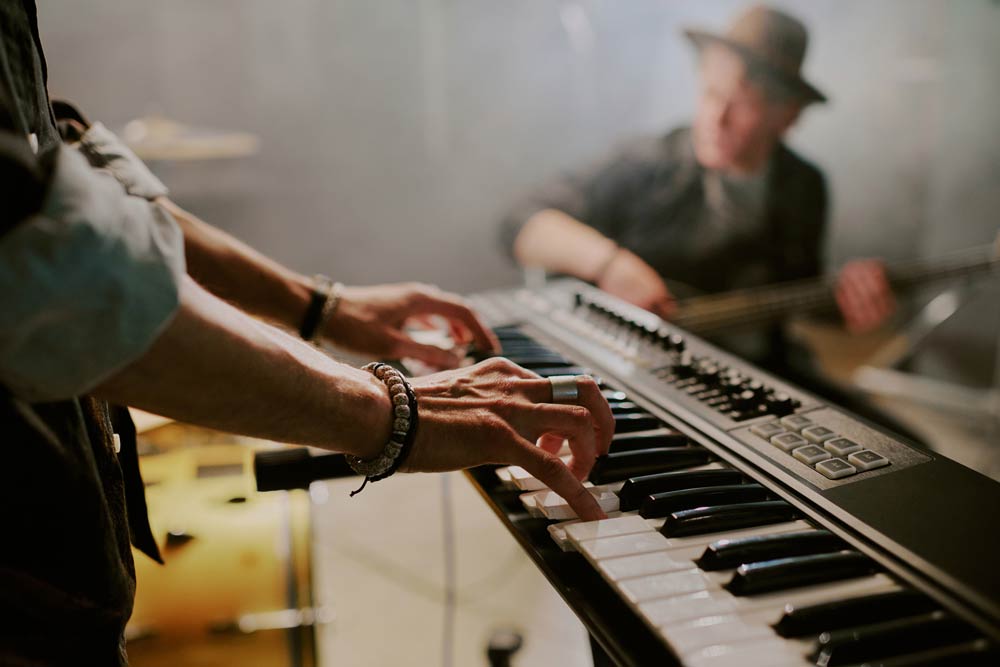
- An instrument on a wall hook. A guitar or ukulele on a hook beside the chair gets played; the same one in a case does not. Many public library systems now lend more than books, and Toronto's lends musical instruments, so you can test interest before spending anything.
- Jigsaw puzzles on a board that slides under the sofa. No setup after the first night, a clear visual finish line, and it tolerates being abandoned for four days.
- Sketching with one pen and one notebook. Not a full art kit. One pen, one book, kept on the kitchen table. Ten minutes drawing whatever is in front of you counts.
- Cooking one new thing a week. Pick the recipe on Sunday and buy the ingredients then, so the Wednesday version has no shopping step.
- Language apps or a chess app with a daily puzzle. Honest caveat: these live on the device that also hosts your distractions. They work for some people and swallow others. Keep the session short and the notification on.
Outdoor options that work at minus 15
Canadian winter outdoor hobbies have a hidden advantage for ADHD: the cold forces a natural end. You cannot doomscroll on a frozen pond. The barrier is gear, and the fix is keeping the gear assembled by the door, not in a bin in the garage.
- Skating on an outdoor rink. Most towns flood at least one community rink from December to February, and larger cities run dozens, with Ottawa's canal the famous one. Used skates from a second-hand sports store cost around 40 to 60 dollars. Bring them to the car trunk or the front hall and leave them there.
- Snowshoeing. Almost no skill, very hard to do wrong, and conservation areas near most cities rent them for roughly 15 to 25 dollars a day if you want to try before buying. Forty minutes on a trail in the snow is a real workout that does not feel like one.
- Cross-country skiing. More technique than snowshoeing, more flow once it clicks. Groomed trails in city parks and provincial parks are common across the country, and many offer cheap lessons in January.
- A daily winter walk with a photo goal. One photo a day of something cold and interesting. The goal gives the walk a point, and the point gets you out the door. Ice cleats for the sidewalks are about 30 dollars and remove the most common excuse.
Hobbies with a built-in community or deadline
If low setup is the first filter, external accountability is the second. A hobby other people are expecting you at is far harder to skip than one you promised yourself, and winter is exactly when ADHD isolation does its quiet damage.
- Curling. Canada has more curling clubs per person than anywhere else, most run beginner leagues from October or January, and the format is social by design: you are on a team, the games are scheduled, and someone notices if you are not there.
- Rec-centre drop-in sports. Municipal pickleball, badminton, volleyball and adult shinny sessions are cheap, scheduled and need no commitment beyond showing up at the posted time.
- A pottery or woodworking course. Eight weeks, paid up front, with a piece to finish by the end. The deadline and the sunk cost are features. Community colleges and municipal recreation programs list these every fall and winter.
- A choir or community band. Weekly rehearsal, a concert date in the spring, and a group of people who will text if you miss two in a row.
- A book club or board-game night. A date on the calendar and something to prepare for. If there is no local one, a library notice board or a community centre will often help you start one.
Rotating instead of quitting: a seasonal hobby shelf
Here is a reframe that takes a lot of guilt out of the closet of abandoned projects. People with ADHD often cycle through interests. That is not a flaw to fix; it is a pattern to plan around. Instead of one hobby you must stick to, keep a shelf of three or four that you rotate as interest moves, and treat a drop in interest as a signal to swap rather than a failure.
A workable winter shelf has one indoor low-setup option, one outdoor option with the gear by the door, and one scheduled social option. When the knitting goes cold in late January, the skates are still by the door and curling is still on Thursday. Nothing is quit. It is just not its turn. Our post on finding hobbies that align with ADHD interests goes deeper on choosing, and the one on creative outlets like music and art is worth a look if the shelf needs an indoor option that is not a screen.
One practical rule: when a hobby rotates off the shelf, put its gear in one labelled bin rather than scattered across the house. Re-entry in March should take two minutes, not an afternoon of searching.
What to try this week
- Pick one option from each of the first three lists. Not four. Three.
- Do the setup fix for each tonight: the hook on the wall, the skates in the hall, the registration for the league.
- Put the scheduled one in the calendar with an alert the evening before.
- Give each a fair two weeks, and when one goes cold, swap it for something else from the list instead of swapping the whole plan.
- In March, write down which one you actually did. That is next winter's shelf, already built.
This article is for educational purposes only and is not medical advice, diagnosis, or treatment. Always consult a licensed healthcare professional about your individual situation. If you are in crisis or thinking about self-harm, call or text 9-8-8, Canada’s Suicide Crisis Helpline, at any time.
Finding Focus uses AI tools to help research and draft some articles. Every article is edited and fact-checked by the Finding Focus team before publication. See our editorial and medical review policy.