Phone in Bed With ADHD: A Screens-at-Night Plan You Can Actually Keep
A phone in bed with ADHD is a reward machine, not a willpower failure. A plan built on friction, a use for the restless 20 minutes and a loop breaker.

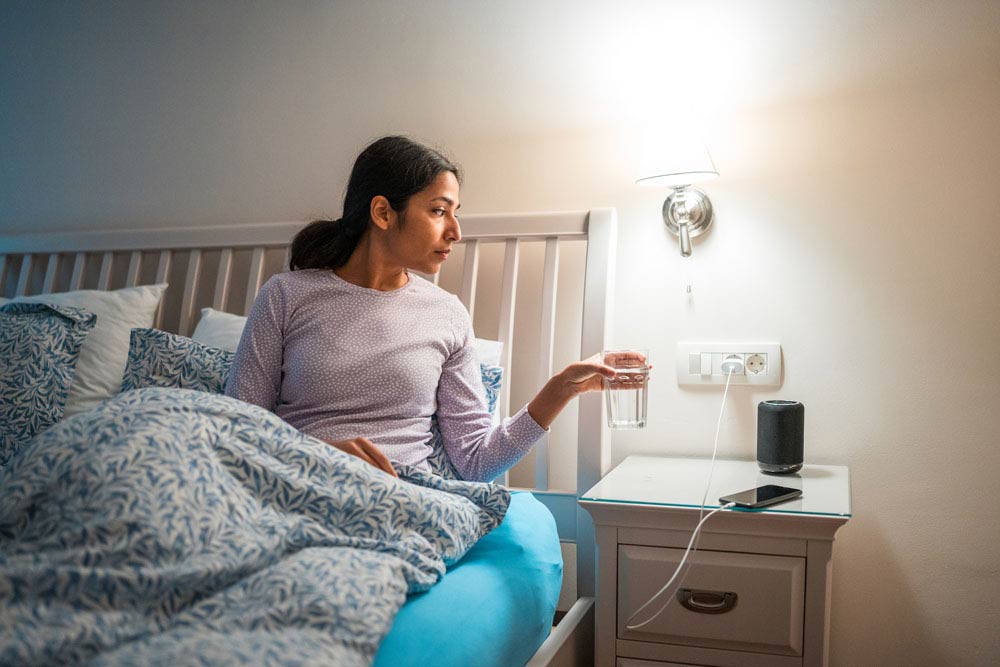
You got into bed at 11 with every intention of sleeping. It is now 1:40 a.m. You have watched forty short videos, read half a thread about a subject you do not care about, and checked the weather for a city you are not visiting. You know this is a problem. You have known for years. The phone in bed with ADHD is the habit people feel most ashamed of and change least, and the reason is that it is not really a habit. It is the best reward source in the house, placed within reach at the exact hour your brain is hungriest for one.
This plan does not ask you to be more disciplined. It changes the room, the phone and the twenty minutes after you put it down, and it gives you a way out of the 'one more video' loop when you are already in it. It also takes seriously the possibility that the scrolling is a symptom of something else.
Why the phone is a reward source, not a bad habit
A short video, a notification, a new post, a reply. Each one delivers a small, unpredictable reward, and unpredictable rewards are the most compelling kind. Many people with ADHD describe an under-stimulated, restless feeling in the evening, especially once the day's demands stop, and the phone is the fastest relief for it. Add that bedtime itself is boring and slightly uncomfortable, that the day may have felt like it was not yours, and that lying in the dark with your thoughts is the opposite of stimulating, and the phone stops looking like a failure of character. It looks like a reasonable response to a real need, badly timed.
That reframe matters because every willpower-based solution assumes you will choose differently at 11:30 p.m., and 11:30 p.m. is when your capacity to choose is lowest. The plan below assumes you will not choose well then, and moves the decisions to 7 p.m. and to the physical layout of the room.
Friction, not willpower: charger location, greyscale, app limits
Each of these adds one step between you and the scroll. One step is often enough, because the pull is strong but shallow.
- The charger lives outside the bedroom. Kitchen counter, hallway table. This is the single most effective change on the list. Buy a $15 alarm clock so the phone has no reason to be in the room.
- Greyscale after 9 p.m. Both major phone systems let you set a shortcut or a bedtime mode that turns the screen black and white. A grey feed is a dramatically less interesting feed.
- App limits with a passcode you do not know. Use the built-in screen-time controls to lock the two or three apps you lose time to from 10 p.m. to 7 a.m., and have a partner or friend set the override code. You can still make a call. You cannot override the limit at midnight.
- Downtime and do-not-disturb on a schedule, so the phone does not light up and invite you back.
- A second, duller device in bed. An e-reader with no browser, or a paper book, is allowed. The phone is not.
Set all of this up at 7 p.m. on a day when you feel fine about it. The point is that by bedtime the decision has already been made by a calmer version of you.
Replacing the scroll: what to do with the restless 20 minutes
The phone was doing a job, and if you remove it without a replacement the restlessness has nowhere to go. The first twenty minutes after lights-out are the hard part. Plan for them the way you would plan a child's bedtime, with a short sequence that is the same every night.
- A brain dump on paper. Two minutes, notebook by the bed, every open loop from the day written down so it stops circling. Tomorrow's first task at the bottom.
- Audio with a sleep timer. An audiobook or a familiar podcast, set to stop in 20 or 30 minutes, played from a speaker or the e-reader, not the phone. Familiar is important; a new story keeps you awake to find out what happens.
- A paper book that is good but not gripping. Essays, non-fiction, something you can put down mid-page.
- A body scan or slow breathing, if that works for you. For some people with ADHD it does not, and the audio is the better choice. Do not force the quiet option because it is supposed to be the healthy one.
- A consistent cue. The same lamp, the same audio, the same order. After a couple of weeks the sequence itself starts to signal sleep.
The rest of a bedtime routine can be built around this core once the core is holding.
The 'one more video' loop and how to interrupt it
Some nights the phone will be in bed anyway. Travel, a sick kid, a bad week. The loop runs like this: the feed autoplays, each clip ends on a hook, and 'one more' never has a natural stopping point because the design is built to remove them. Interrupting it needs a stop that comes from outside the feed.
- Turn autoplay off in every app that has the setting. A pause between videos is a chance to notice the time.
- Decide the number before you open the app. 'Five videos.' Count them. The number is the stopping point the feed will not give you.
- Scroll standing up or sitting on the edge of the bed, never lying down. Lying down with the phone is the posture the loop lives in.
- Set a timer for 15 minutes before opening the app. When it goes off, the phone goes to the kitchen. No negotiation, because the negotiation always loses.
- If you catch yourself at 1 a.m., do not punish yourself with the full routine. Phone to the kitchen, lamp off, audio on. Rescue the night rather than writing it off.
If nothing sticks: when scrolling is a symptom of something else
If you have genuinely done the friction steps for three weeks and the phone still wins most nights, the scrolling may be doing a job the plan has not addressed. Some possibilities worth considering with a clinician. A body clock that runs late, so you are in bed hours before you are sleepy and the phone fills the gap. Anxiety or low mood that gets loud in the quiet, with the feed as a way of not hearing it. Days that feel entirely owed to other people, so the night becomes the only time that is yours and you refuse to give it up, even to sleep. Or ADHD itself, untreated or under-treated, with the evening restlessness as one of its clearest signs.
Our answer on whether ADHD treatment can help with losing hours to a phone or gaming describes how clinicians think about this, and ADHD and sleep problems covers the broader picture. If you are in Ontario, CBT and ADHD coaching are available through Finding Focus at /therapy/, and a therapist can help sort out which of these is running the show. If the nights have become a place where depression or dark thoughts live, Canada's 9-8-8 Suicide Crisis Helpline is available by call or text, 24 hours a day.
What to try this week
- Buy an alarm clock and move the charger to the kitchen tonight.
- Set greyscale and app limits at 7 p.m., with someone else holding the code.
- Put a notebook, a paper book and a speaker or e-reader by the bed, and run the same 20-minute sequence for seven nights.
- Turn autoplay off everywhere and pick your number for the nights the phone sneaks in.
- After three weeks, if nothing has moved, book the conversation about what the scrolling is doing for you.
This article is for educational purposes only and is not medical advice, diagnosis, or treatment. Always consult a licensed healthcare professional about your individual situation. If you are in crisis or thinking about self-harm, call or text 9-8-8, Canada’s Suicide Crisis Helpline, at any time.
Finding Focus uses AI tools to help research and draft some articles. Every article is edited and fact-checked by the Finding Focus team before publication. See our editorial and medical review policy.